What Are Pocket Filters?
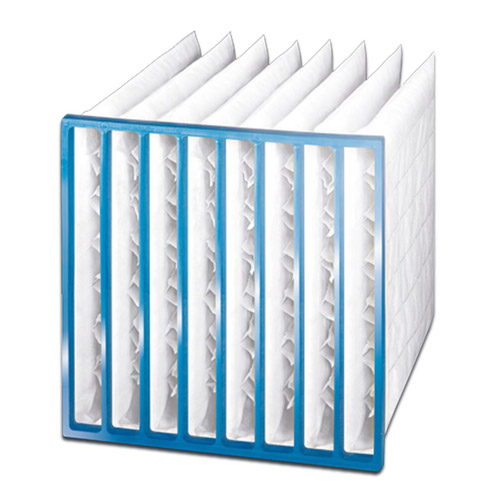
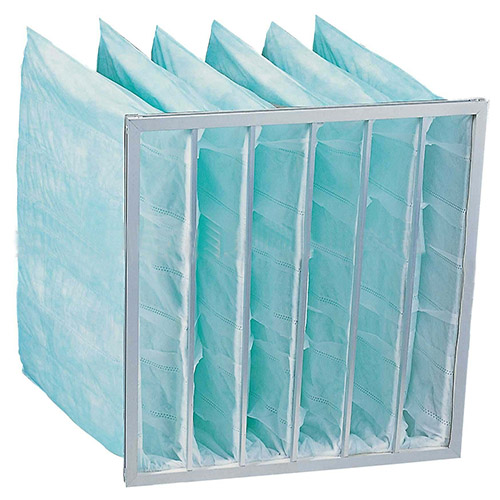
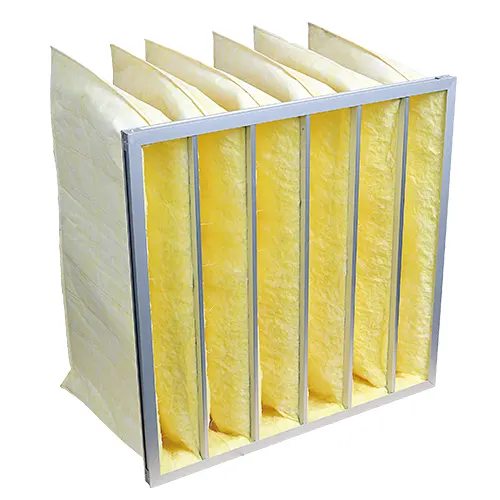
Pocket Filters are among the most advanced types of air filters, engineered to remove suspended particles and improve indoor air quality. Their multiple fabric pockets dramatically increase the effective filtration surface compared with flat panel filters, channelling airflow with significantly lower pressure drop.
Features & Structure
Pocket Filter Classification
Pocket filters can be classified by filtration efficiency, number of pockets and applicable standard:
1. By Efficiency
Removal of large and medium particles — dust and coarse suspended matter
Use: pre-filter in industrial ventilation and general-purpose buildings
Removal of fine and medium particles with high efficiency
Use: office buildings, hospitals, light cleanrooms and sensitive HVAC systems
Removal of particles ≥0.3 µm at 99.95–99.97% efficiency
Use: ISO Class 5–6 cleanrooms, hospitals and pharmaceutical industries
2. By Number of Pockets
| Pockets | Application | Notes |
|---|---|---|
| 4–6 pockets | Residential and small systems | Suitable for residential units and small office spaces |
| 8–12 pockets | Office and mid-size commercial buildings | Balance between filtration surface and footprint |
| More than 16 pockets | Large industrial sites, cleanrooms and hospitals | Maximum filtration surface and service life |
3. By Standard
For general ventilation coarse and fine filters (G and F classes)
Evaluates filtration of airborne particles PM10, PM2.5 and PM1
High-efficiency final filter for critical and cleanroom environments
Pocket Filter Applications
Benefits of Pocket Filters
Extended Filter Life
Large filtration surface extends service life and reduces maintenance costs
Lower Energy Consumption
Lower pressure drop translates directly into less energy consumed by fans and blowers
Superior Outlet Air Quality
Effective removal of fine and medium particles at high efficiency
Multi-Stage Protection
Can be combined with G or F pre-filters to build a multi-stage protection system
Filter Class Comparison per EN 779
| Filter Class | Avg. Efficiency (Am) | Main Application | Particle Type |
|---|---|---|---|
| G4 | – | Pre-filter | Coarse particles (>10 µm) |
| F5 | 40–60 % | Medium filter | Medium and fine particles |
| F6 | 60–80 % | Final filter in standard systems | Fine particles (1–10 µm) |
| F7 | 80–90 % | Hospitals, laboratories | Very fine particles (0.5–1 µm) |
| F8 | 90–95 % | Cleanrooms, pharmaceutical industries | Sub-micron particles |
| F9 | >95 % | Ultra-sensitive environments | Very fine particles (<0.5 µm) |
EN 779 has been superseded by ISO 16890 since 2018. ISO 16890 evaluates performance against real-world airborne particle sizes (PM10, PM2.5 and PM1), giving a more accurate picture of filter performance in service.
Why PowerSep?
PowerSep draws on up-to-date technical knowledge and advanced manufacturing equipment to produce pocket filters in classes G4 to F9 and HEPA, fully conforming to EN 779 and ISO 16890. High quality, long service life and optimised pressure drop make them an ideal choice for industrial, commercial and sensitive HVAC systems.
Classes G4 to F9 and HEPA
Full coverage of filtration efficiency from coarse to ultra-fine
4 to 20 Pockets
Custom pocket count design tailored to every application
Premium Synthetic Fibre Media
Best-in-class raw materials ensuring filter efficiency and durability
Stage-by-Stage QC and Efficiency Testing
Every filter undergoes efficiency and pressure-drop testing before shipment
Full Conformance to EN 779 & ISO 16890
Guaranteed compliance with international standards across all filtration classes
Custom Manufacturing
Produced to the customer's required dimensions, pocket count and filtration grade