Overview
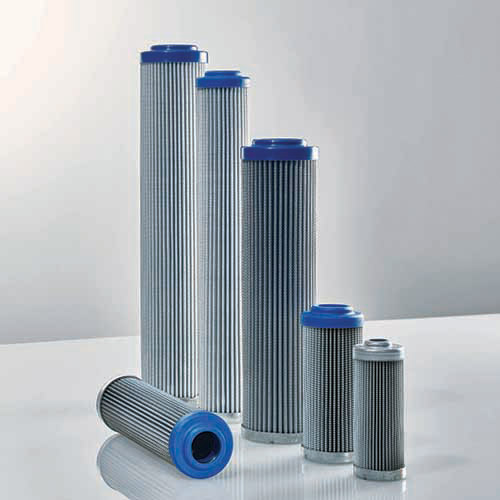
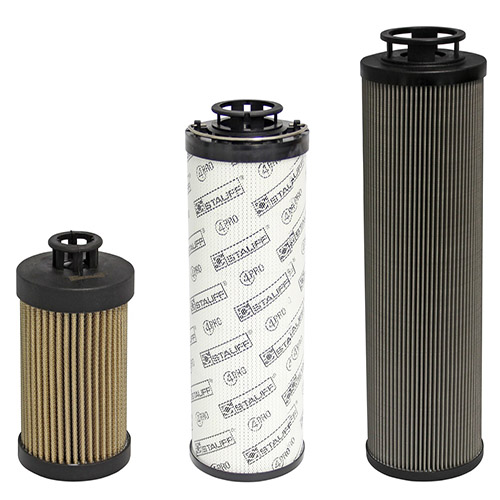
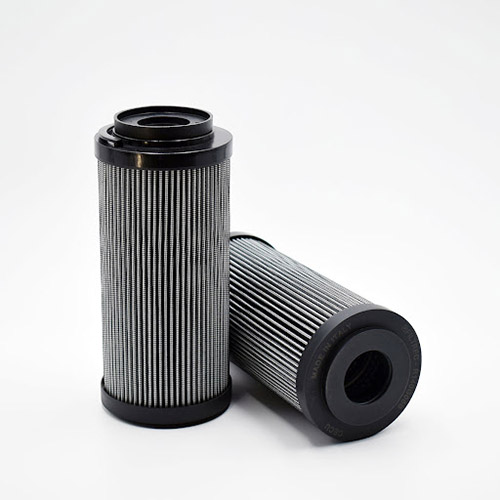
Hydraulic filters are designed to remove solid contaminants, wear particles, environmentally ingressed dirt and oil oxidation products from hydraulic systems. Controlling the contamination level of hydraulic fluid is critical for extending equipment life, preventing unexpected breakdowns and reducing maintenance costs.
Modern hydraulic systems operate to very tight tolerances, so even very fine particles can cause severe wear, reduced efficiency and damage to valves and pumps.
Main Filtration Goals
Hydraulic Filter Types by Installation Location
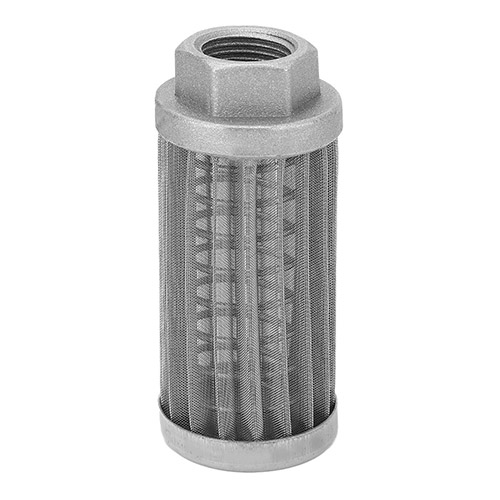
Suction Filter
Inside or on top of tank, before the pump
Primary pump protection against coarse particles
60 to 250 micron
Low pressure drop | Wire mesh or screen media | Focus on cavitation prevention | Common in light-to-medium industrial systems
Pressure Line Filter
After pump, before actuators
Direct protection of control valves and actuators
3 to 20 micron
Handles high pressures (up to several hundred bar) | Microfibre glass media | Suited for servo-valve and precision-sensitive systems
Return Line Filter
Return path to tank
Remove contamination before fluid re-enters the tank
10 to 25 micron
Moderate pressure handling | Tank-top or in-line mounting | Cost-effective for most industrial systems | Most widely used filter type in industrial machinery
Offline / Kidney Loop Filter
Independent circuit from the main system
Continuous oil cleanliness improvement
Steel, power generation and heavy-duty systems
Independent of main operating cycle | Can combine with cooler or contamination sensor | Extends oil service life
Classification by Filter Media Type
Key Filter Selection Parameters
Standards & Tests
International standard for evaluating hydraulic filter performance using multi-pass method
Hydraulic oil cleanliness classification code — basis for allowable contamination levels
Standard test for hydraulic filter pressure drop characteristics
The international standard for evaluating hydraulic filter performance using the multi-pass method. Contaminated fluid is passed continuously through the filter while particle counts are measured at inlet and outlet with a particle counter. Results are expressed as the Beta Ratio (βx), indicating separation efficiency at a specific particle size — for example β10≥200. The standard also determines Dirt Holding Capacity and pressure drop behaviour through to filter plugging. ISO 16889 is the technical basis for comparing filters and plays a key role in defining target cleanliness classes per ISO 4406.
Hydraulic Filters vs. Oil Filters
| Hydraulic Filter | Oil Filter |
|---|---|
| Focus on hydraulic power transmission systems | Focus on lubrication and engine systems |
| High operating pressure (sometimes several hundred bar) | Generally lower operating pressure |
| Main contaminants: metal particles and wear debris | Main contaminants: soot and combustion products |
| Filtration accuracy can reach 3 micron or finer | Filtration accuracy typically 10–40 micron |
| Designed for precision valves and servo-valves | Designed for engine duty cycles |
Why PowerSep?
Domestic Production to International Standards
Designed and tested to multi-pass test requirements per ISO 16889
Competitive Pricing, No Import Middleman
Reduced total cost without quality compromise
Fast Delivery and Stable Stock
Immediate supply without import lead-time dependency
Custom Manufacturing
Production to project-specific flow, pressure and cleanliness class requirements
Direct Technical Support
Filter selection consulting and equivalent replacement for foreign brands
After-Sales Service
Spare parts supply and guaranteed continuity for hydraulic systems